Paris foundation · Marrakech home
Why the museum was built in Marrakech
A museum devoted to a French fashion house sitting in a Moroccan city is not an arbitrary choice. Yves Saint Laurent's relationship with Marrakech ran for decades and shaped how he saw colour.
Moroccan inspiration
The city that changed his palette
Saint Laurent arrived in Marrakech and found colour he had not used before. The city's light, its gardens, and its craft traditions fed collections across the following decades. He bought Jardin Majorelle with Pierre Bergé, which turned a private garden into part of his daily surroundings. That purchase is the reason the museum and the garden share a neighbourhood today.
Once the garden was theirs, the area around it gathered a small cluster of institutions with one thing in common: they all trace back to the same decision about where to spend time. A museum was the logical next step, and its address tells you which period of Saint Laurent's life the collection is meant to serve.
He did not visit Marrakech as a tourist. He bought a garden here, and worked from it.
Paris foundation connection
The archive behind the garments on show
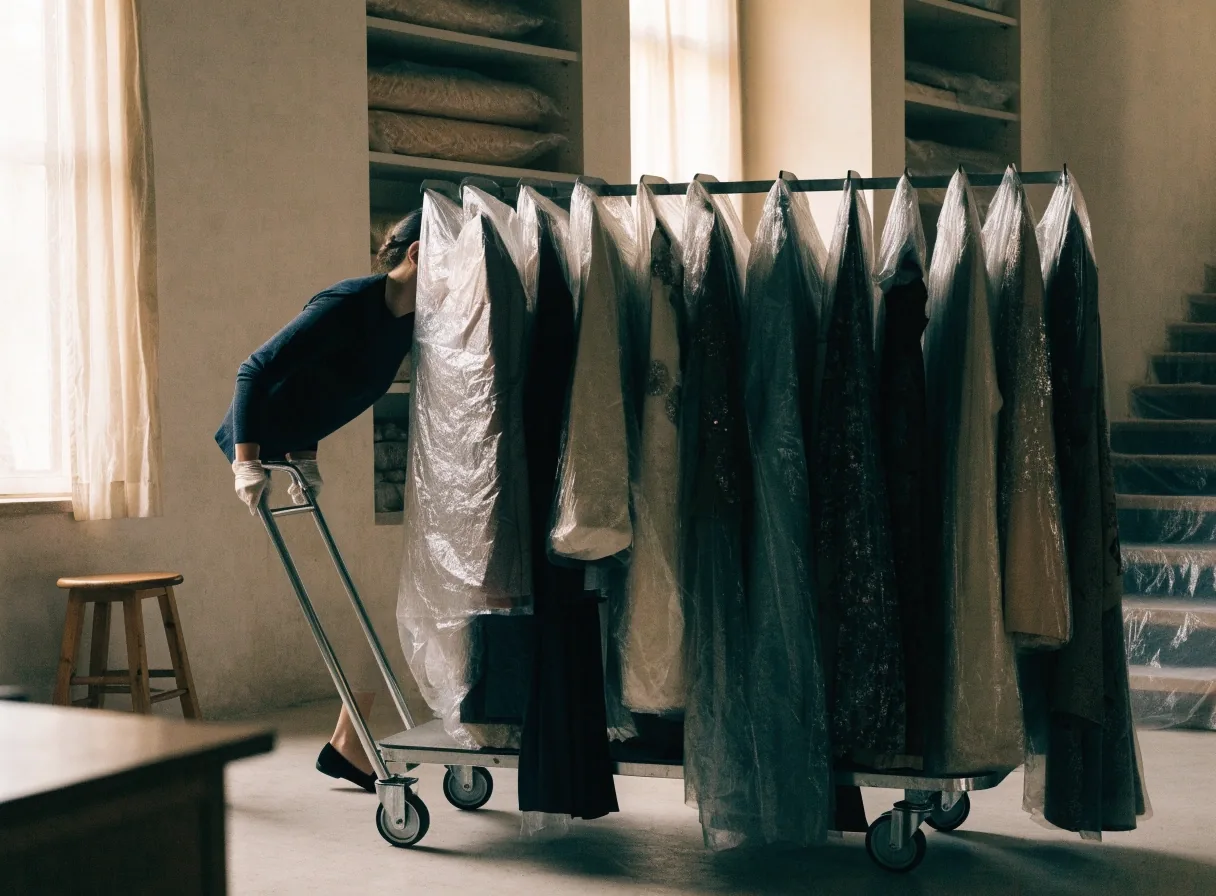
Coverage notes that the foundation lent couture garments for the Marrakech museum, which is what allows real archive pieces to be shown rather than reproductions.
A museum inside a heritage ecosystem
The museum is part of a broader Saint Laurent heritage ecosystem tied to the Paris foundation. The lending relationship is not administrative paperwork; it is the reason curators here can stage finished couture next to the working material around it and explain both in a single room. That connection also gives the institution its curatorial authority — the garments travel with documentation, condition context, and a stated provenance that a private collection could not supply.
It links Marrakech to the international work of preserving Saint Laurent's legacy in a way that matters for what you actually see. If you are comparing this museum to fashion exhibitions elsewhere, look at whether collection pieces are archive loans or reproduction display. Here the answer is straightforward, and it changes how you read every label on the wall.
That is also why the site has two exhibitions to plan around rather than one. The permanent rooms carry the collection and its Moroccan thread; the temporary rooms are where the foundation's lending pipeline shows a narrower idea. Reading both pages before you go is more useful than choosing one and skipping the other.
Purpose-built, not adapted
Why a dedicated building mattered
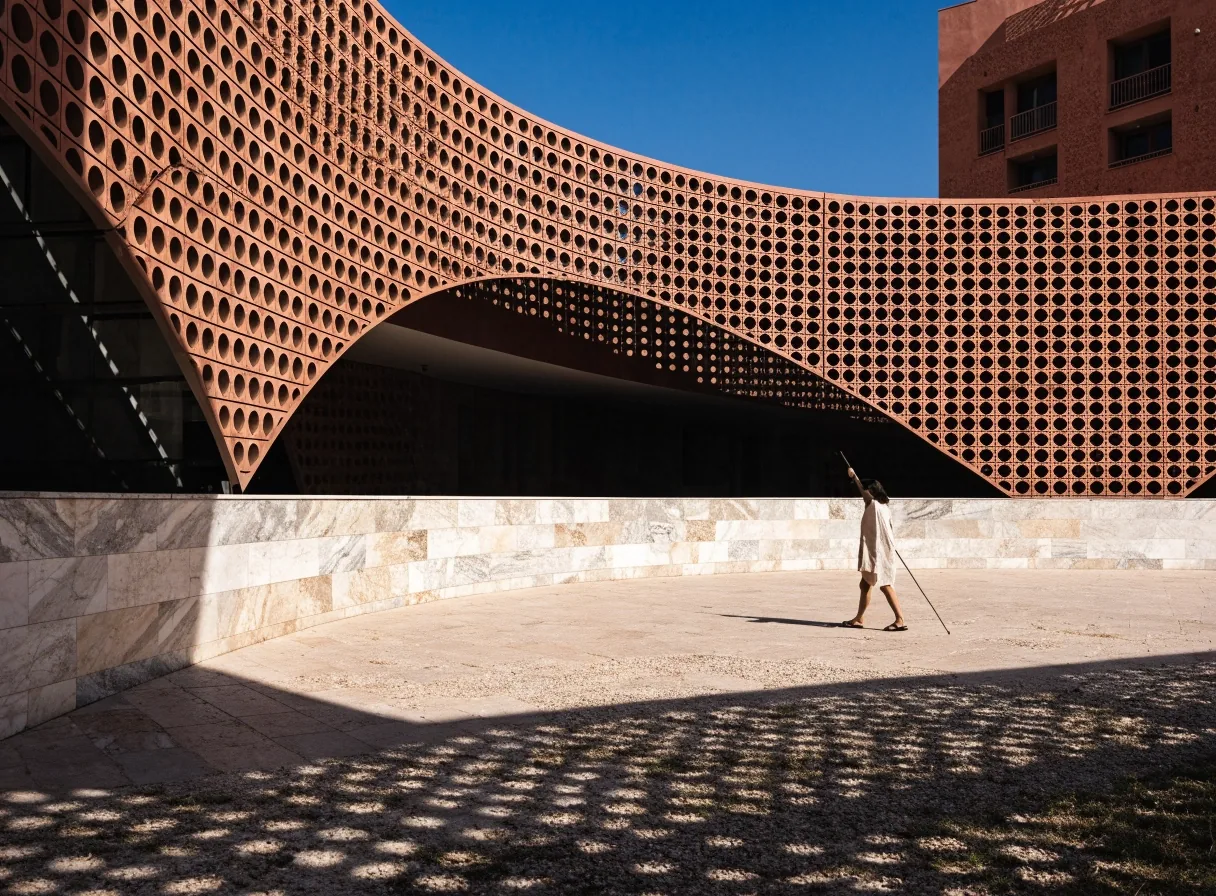
A collection of couture needs controlled light, stable conditions, and deliberate staging. The Marrakech museum was built as a purpose-designed institution rather than adapted from an existing villa. Studio KO's building gave the project a brick lattice facade, a base of Moroccan marble and stone, and interior spaces planned around how garments are displayed. The architecture is part of the argument, not a wrapper around it.
That distinction matters when you walk in. Textile needs lower light than a painting does, so the rooms are quiet and the lighting is deliberate. A converted villa would have forced curators to work around domestic proportions and windows. Here the proportions were chosen for the garments.
Read about the architecture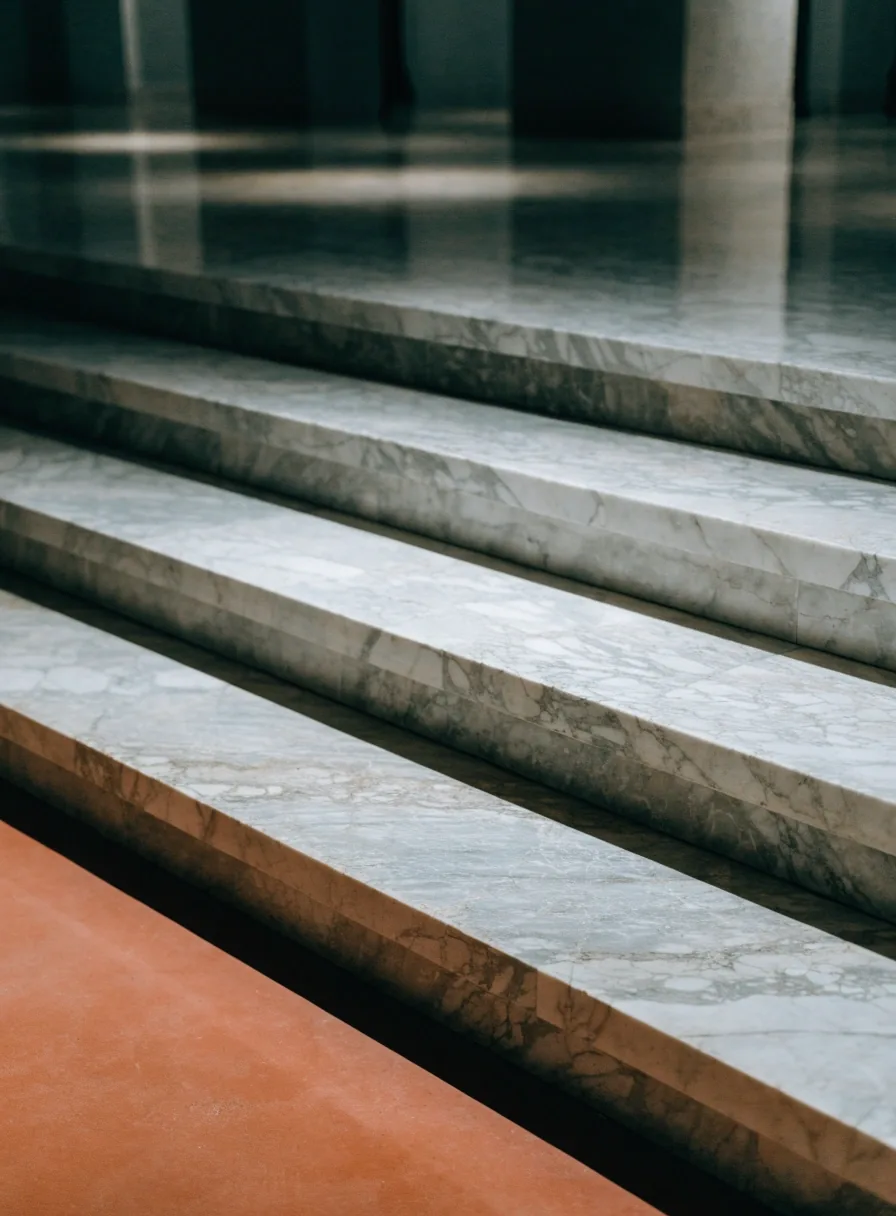
Curatorial framing
How the collection is framed
Christophe Martin designed the permanent exhibition space, and his work is credited in the museum's architecture and visitor-material descriptions. He frames garments alongside the creative process, which means sketches and archive references sit near finished couture. That staging choice shapes what visitors take away. You leave with a sense of how Saint Laurent worked, not only what he made.
Taken together, these four layers answer a question that photos alone cannot: what knowledge was a garment built on. Walk the permanent rooms with that in mind and the sequence starts to read like a workbench rather than a shop window.
A city, not a stopover
Marrakech as a fashion destination
Marrakech is one of the few cities where a major fashion designer museum is tied directly to the urban identity. The museum is commonly bundled with gardens and arts museums in travel planning, and visitors come for both architecture and fashion history. That combination gives the city a cultural circuit rather than a single stop. It also means the museum serves art, design, and luxury-travel audiences at once.
Pierre Bergé's role
Pierre Bergé was Saint Laurent's partner in life and in business, and the Marrakech project carries his imprint. The Jardin Majorelle purchase was theirs together, and the surrounding cultural cluster grew from that decision. The Pierre Bergé Museum of Berber Arts is part of the same zone, named for him. Understanding that pairing explains why the area reads as one institution spread across three sites.
What the museum is not
It is not an encyclopedic fashion museum, and it does not attempt a complete survey of twentieth-century couture. It is not a shopping destination with a gallery attached. The scope is Saint Laurent's work, its Moroccan thread, and the archive material around it. Knowing that upfront helps you judge the visit on what it actually offers.
Reading the visit
How to use this background when you visit
Read the exhibition pages before you go, then let the building and the garment selection confirm or complicate what you read. The architecture page covers material choices; the permanent and temporary exhibition pages cover content. If you are planning the wider circuit, the Jardin Majorelle page sequences the three sites. Background helps most when it sharpens what you notice.
Plan around the story
Sequencing the three sites
The three addresses sit close enough to walk between. Order matters less than pacing: giving the museum a full hour beside the garden is more useful than racing both. Tuesday through Sunday the gates are open from 10:00 to 18:00, and the middle of the day is the busiest — an earlier or later slot leaves more room in front of the garments.
If you only have one afternoon, do the museum first while you are fresh, then finish in the garden where nothing needs reading. If you want help planning the wider cultural circuit, the garden page walks through how the three sites sit together.
Plan the cultural circuitBefore you go
Questions we hear most
Three things people ask us before a first visit. If your question is not here, our contact page carries the phone number and email for the guide.
Why is a Saint Laurent museum in Marrakech rather than Paris?
Are the garments on display originals?
How long should I allow for the visit?
Continue the reading
Where to go next on this guide
Background sharpens a visit, but the practical pages do the work. Start with the permanent exhibition if you want the collection itself, or the architecture page if the building is what drew you. For visit planning, hours, and how to reach us, the contact page carries everything we have.
Musée YSL Marrakech Guide is an independent editorial resource. Questions about a specific visit are best answered by the museum itself through our contact page.