Musee YSL Marrakech Guide Musée YSL Marrakech
Lattice stone and terracotta wall of the Marrakech museum under hard midday light

Temporary exhibition hall · Marrakech

Temporary exhibitions and museum programming

The permanent gallery is the museum's core. The temporary space is what keeps it moving — fashion, art and cross-disciplinary shows that rotate through the year.

Why the program exists

The permanent gallery stays put. This one does not.

The yves saint laurent museum in Marrakech holds a permanent collection that visitors expect. The temporary exhibition space is separate from it on purpose. That separation lets the institution host work that would never fit the permanent hang without disturbing the Saint Laurent display — and it means a returning visitor has something genuinely new to walk into.

If you have already been once, this is the room to check first before you book travel.

Interior alcove of a museum temporary exhibition hall lit by a hard overhead shaft

The space itself

A dedicated space, apart from the permanent gallery

The museum keeps a dedicated temporary exhibition space that runs apart from the permanent galleries. That sounds like an administrative detail until you are standing in it. The separate room means curators can stage materials and themes that would not survive being folded into the Saint Laurent hang — early sketches pinned alongside finished garments, a thematic loop that only makes sense in sequence, an artist's intervention that would jar the permanent room's rhythm.

It also changes how you plan. Because the temporary programme rotates, the show you read about six months ago may have closed, and the room you walk into today may be hosting something you have never heard of. Exhibition dates change. Confirm the current show and its run before you commit to travel, and if a specific temporary exhibition in Marrakech is the reason for your trip, build the trip around it rather than fitting it into leftover days.

The temporary hall is smaller than the permanent gallery, and that matters for pacing. A single dense room rewards a slower walk than a long permanent circuit. Give it twenty to forty focused minutes instead of treating it as an add-on corridor on the way out.

What the program covers

Temporary exhibitions belong to the museum's wider cultural programming, and they push the institution past couture alone. Expect fashion, art and cross-disciplinary shows tied to the museum's interests — couture that borrows from painting, a photography survey of Moroccan studios, a designer invited to respond to the building itself.

Fashion

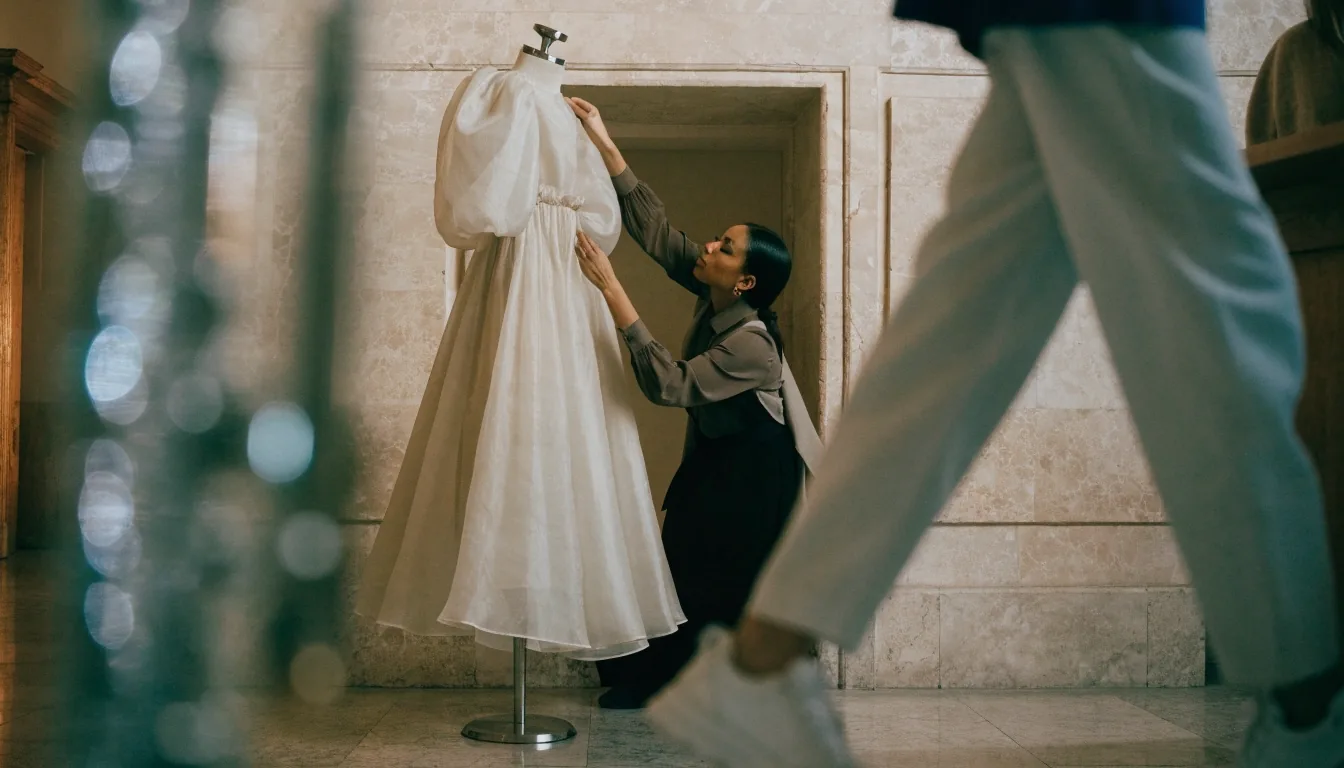
Couture shown outside the permanent hang

Garments and archival material that would overpower or disrupt the permanent gallery can live here for a season, letting the museum explore a designer, a decade or a single theme with more room to argue its case.
Art

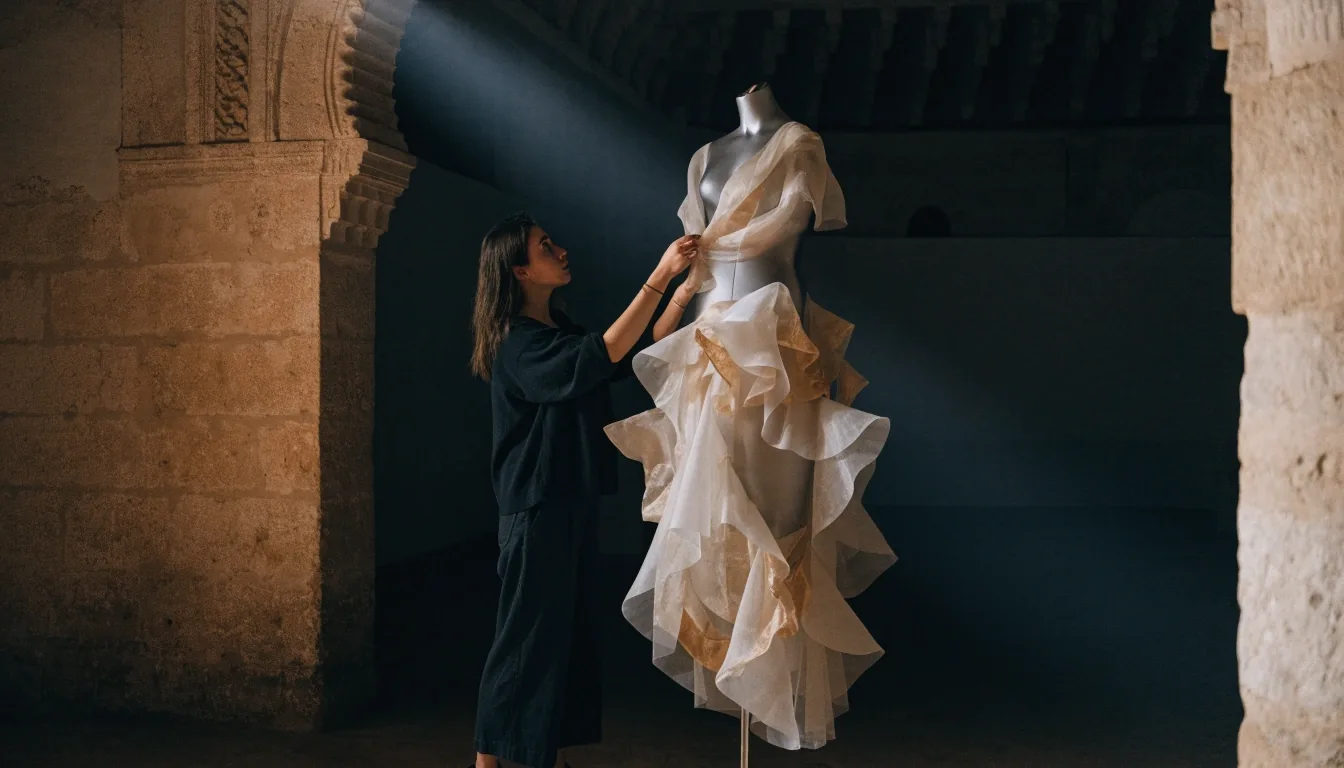
Work from Moroccan and international artists

The program reaches into the visual arts, with shows tied to the cultural calendar around Marrakech. This is where the museum can test ideas the permanent collection was never built to carry, and where local art audiences find a reason to visit the building regularly.

Cross-discipline

Shows that mix media and methods

Some shows sit between disciplines — textiles next to sculpture, photography next to garment construction. These are the ones that repay a second walk, and they tend to generate the evening talks scheduled in the auditorium during their run.

The program keeps the institution relevant to audiences who already know the permanent collection by heart. It is where curatorial risk is possible without touching the core display.

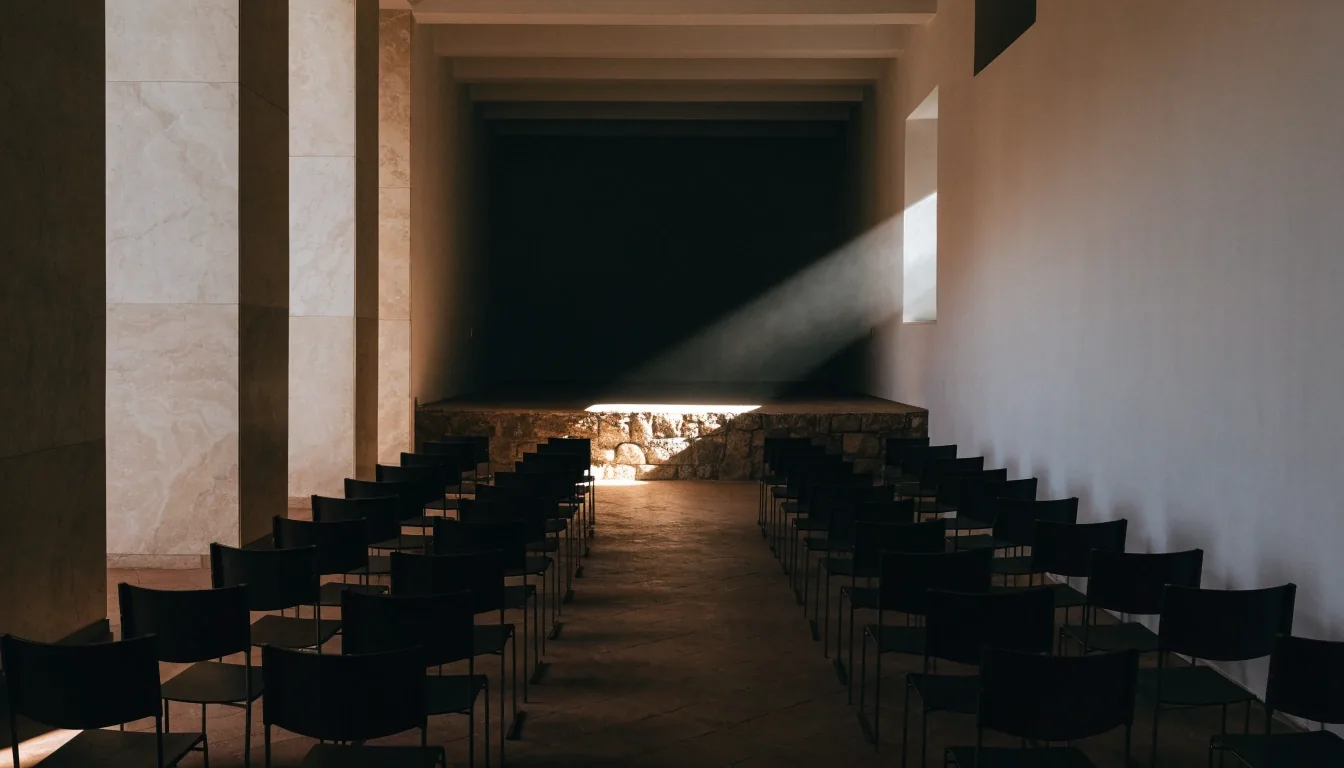
Empty auditorium seating facing a low stage under a shaft of daylight

Live programming

The auditorium and events

The auditorium hosts talks, lectures and cultural events connected to the exhibition program. These are not filler between gallery visits. They give the museum a live dimension, with designers, researchers and artists appearing in person.

Talks with designers and researchers

Sessions attached to the current show, where the people behind the material explain it face to face.

Scheduled dates, not continuous entry

Events run on set days rather than all day. Check the program for dates and any access details, since talks may require separate registration.

A reason to pick one week over another

If your travel dates are flexible, an evening talk can decide which week makes the trip. Check the schedule alongside the exhibition dates.

Ask about a visit date

Why the program drives repeat visits

A museum with only a permanent collection gets seen once. Temporary exhibitions support repeat visits from fashion and art audiences, and they give local visitors a reason to return through the year.

That rhythm is common to major cultural institutions, and it suits a city with Marrakech's visitor turnover — a steady flow of travellers passing through, alongside residents who want a reason to come back in November and again in March. For the yves saint laurent marrakech programme specifically, the rotating hall means the building never becomes a one-time stop.

If you have been before, the temporary space is where to look first. Anywhere else in the building will feel familiar; this room will not.

One visit, two reasons

The permanent gallery gives the museum its authority. The temporary room gives it a calendar. You can plan for one and be surprised by the other.

Before you fix dates

Planning around the program

Exhibition dates change, so confirm the current show and its run before you commit. If a specific exhibition is your reason for visiting, build the trip around it rather than the other way round.

First

Confirm the current show and its closing date through the Jardin Majorelle ticketing domain before booking flights.

Next

Check the auditorium schedule for the same window — talks may need separate registration.

Then

Allow extra visit length if the temporary show is dense — a small room can take longer than expected.

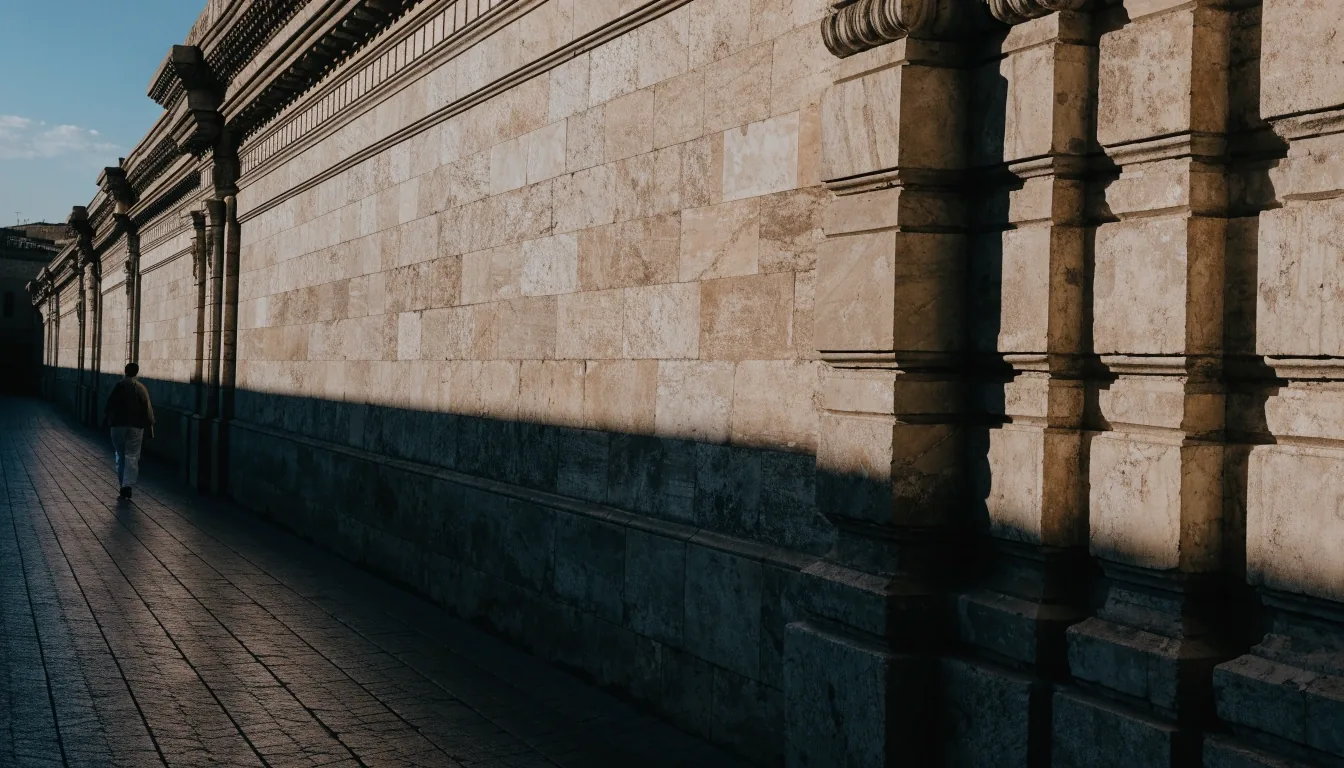
Museum exterior wall running along a paved walkway in hard directional light

What to combine with the temporary hall

The temporary space works well paired with the permanent gallery in one visit, since they inform each other. The bookstore often carries material related to the current exhibition, which extends the theme. If you are planning the wider circuit, Jardin Majorelle and the Pierre Bergé Museum of Berber Arts sit within a short walk — the gardens are a useful contrast after a dense exhibition.

Plan the circuit

Questions before you go

Temporary exhibition questions

Three things visitors ask most about the rotating program and the events around it.

How often do temporary exhibitions change?

The program rotates through the year, and dates vary by show. Check the official ticketing domain for current and upcoming exhibitions before you travel — the run length is set per exhibition rather than on a fixed season.

Do I need a separate ticket for the temporary exhibition?

Access is organized through the Jardin Majorelle ticketing domain, which the official site describes as the only official website for the museum, Jardin Majorelle and the Berber arts museum. Confirm what your ticket covers when booking.

Is the auditorium open to all visitors?

Events are scheduled rather than continuous. Check the program for dates and any access details, since talks may require separate registration.

Where do I confirm the current show?

The Jardin Majorelle ticketing domain lists what is on and what is coming. Our own pages cover the permanent collection and the building, so you can plan the rest of the visit around a confirmed exhibition date.

Check the show before you book

The temporary hall is the one part of the museum that changes. If a live event or a specific exhibition is what you are travelling for, start there — then plan the rest of the visit around a fixed date. Reach us at +61 3 9654 8821 or [email protected], Tuesday to Sunday, 10:00 – 18:00.